
Artificial Intelligence startups today are launching faster than ever before—but funding them is harder than it looks. Investors are no longer impressed by “AI-powered” labels alone. They want clear, measurable return on investment (ROI) backed by real-world adoption, business impact, and scalable economics.
If your startup can move from product narrative to proof narrative, you dramatically increase your chances of securing venture funding, strategic partnerships, and enterprise adoption. This blog explores how AI startups can effectively communicate ROI to investors and position themselves for capital success in 2026 and beyond.
Table of Contents
- Why ROI Matters More Than Innovation in 2026
- The Shift from AI Hype to Business Outcomes
- What Investors Actually Look for in AI Startups
- Defining ROI for AI Products
- Building a Metrics-Driven Story Investors Trust
- Translating Technical Value into Financial Impact
- Demonstrating Enterprise Adoption Signals
- Structuring an Investor-Ready ROI Narrative
- Common Mistakes AI Startups Make While Pitching ROI
- Creating a Repeatable ROI Framework for Growth
- Final Thoughts: Turning Intelligence into Investment
Why ROI Matters More Than Innovation in 2026
Over the last decade, AI innovation alone could secure early-stage funding. Today, that’s no longer the case.
Investors now evaluate AI startups using three filters:
- Can this solution reduce cost?
- Can it increase revenue?
- Can it scale predictably?
In short, investors are asking:
“Where is the measurable business outcome?”
AI startups that fail to answer this question struggle to raise capital—even with strong technical differentiation.
That’s why communicating ROI clearly is no longer optional. It’s essential. 🚀
The Shift from AI Hype to Business Outcomes
Between 2020 and 2023, terms like generative AI, machine learning automation, and predictive intelligence dominated pitch decks. However, investors quickly learned that many AI solutions lacked deployment maturity.
Today’s investors want:
- Deployment success stories
- Usage metrics
- Operational savings data
- Customer retention improvements
- Revenue acceleration indicators
Instead of asking what your AI does, they ask:
“What business problem does your AI solve—and how much money does it save or generate?”
This marks the shift from product storytelling to impact storytelling.
What Investors Actually Look for in AI Startups
To communicate ROI effectively, startups must understand investor expectations first.
Key evaluation dimensions include:
1. Efficiency Gains
Does your AI reduce manual effort?
Example:
- Support automation reducing ticket resolution time by 42%
- DevOps AI cutting incident detection time by 60%
Efficiency translates directly into cost savings.
2. Revenue Acceleration
Does your product help customers earn more?
Examples include:
- Conversion rate improvement
- Upsell automation
- Predictive sales targeting
- Marketing personalization
Revenue-linked AI solutions attract premium valuations.
3. Scalability Potential
Investors prefer platforms—not tools.
They look for:
- API-first architecture
- multi-tenant readiness
- repeatable deployment models
- vertical expansion potential
ROI grows when scale grows.
Defining ROI for AI Products
Many founders make a critical mistake—they assume ROI is obvious.
It isn’t.
You must explicitly define it.
Typical AI ROI categories include:
Cost Reduction ROI
Examples:
- Workforce optimization
- Infrastructure savings
- Support automation
- Monitoring consolidation
Productivity ROI
Measured through:
- time saved per employee
- faster release cycles
- automation coverage increase
- reduced operational friction
Risk Reduction ROI
Often overlooked but powerful:
- fraud detection improvement
- compliance automation
- anomaly prediction
- downtime prevention
Risk reduction builds investor confidence quickly.
Building a Metrics-Driven Story Investors Trust
Metrics transform claims into credibility.
Instead of saying:
“Our AI improves operations.”
Say:
“Our AI reduced mean-time-to-resolution by 38% across three enterprise customers within 90 days.”
Strong ROI storytelling includes:
- baseline metric
- improvement achieved
- timeframe
- sample size
- financial translation
Example:
“Reduced monitoring tool costs by $120K annually per enterprise deployment.”
That’s investor-ready language.
Translating Technical Value into Financial Impact
One of the biggest challenges technical founders face is translating innovation into economics.
Instead of highlighting:
- transformer architecture
- reinforcement learning pipelines
- LLM orchestration layers
Translate into:
- cost avoided
- time saved
- revenue unlocked
- automation replaced
Example transformation:
Technical statement:
“Our AI correlates telemetry signals across distributed systems.”
Investor-ready statement:
“Our platform reduces incident triage effort by 55%, saving enterprises approximately $180K annually per DevOps team.”
See the difference? 💡
Demonstrating Enterprise Adoption Signals
Nothing validates ROI better than real usage.
Even early-stage startups can demonstrate adoption signals such as:
- pilot-to-paid conversion rate
- renewal intent
- active usage growth
- expansion revenue
- cross-team deployment
Investors interpret adoption as proof of future revenue stability.
Strong signals include:
- multiple departments using your solution
- expansion from one geography to another
- integration into core workflows
- internal champion advocacy
Adoption reduces perceived risk dramatically.
Structuring an Investor-Ready ROI Narrative
A winning AI pitch follows a structured ROI logic.
Here’s a proven storytelling flow:
Step 1: Define the Problem Cost
Example:
“Enterprises lose $2M annually due to fragmented observability tools.”
Step 2: Introduce the AI Advantage
Explain how your system solves the problem differently.
Example:
“Our AI unifies monitoring signals across infrastructure layers.”
Step 3: Present Quantified Results
Show measurable improvement.
Example:
“Customers reduced monitoring spend by 40% within six months.”
Step 4: Demonstrate Scalability
Explain expansion potential.
Example:
“Solution scales across cloud, microservices, and legacy systems.”
Step 5: Link to Market Opportunity
Tie ROI to market size.
Example:
“This creates a $4B consolidation opportunity across enterprise observability.”
This structure builds investor confidence logically and quickly.
Common Mistakes AI Startups Make While Pitching ROI
Many strong products fail to secure capital due to messaging gaps.
Common mistakes include:
Talking About Features Instead of Outcomes
Investors don’t fund features.
They fund impact.
Ignoring Customer Economics
Always answer:
“What does this save the customer annually?”
Overusing Technical Language
Clarity beats complexity every time.
Missing Deployment Evidence
Even small pilot data helps.
Never pitch without numbers.
Creating a Repeatable ROI Framework for Growth
Smart AI startups build reusable ROI communication frameworks early.
Your framework should include:
Value Hypothesis Template
Example:
“We reduce manual operations effort by X%.”
Measurement Model
Track:
- time saved
- cost avoided
- automation coverage
- productivity gain
Case Study Library
Document:
- before metrics
- after metrics
- deployment timeline
- business outcomes
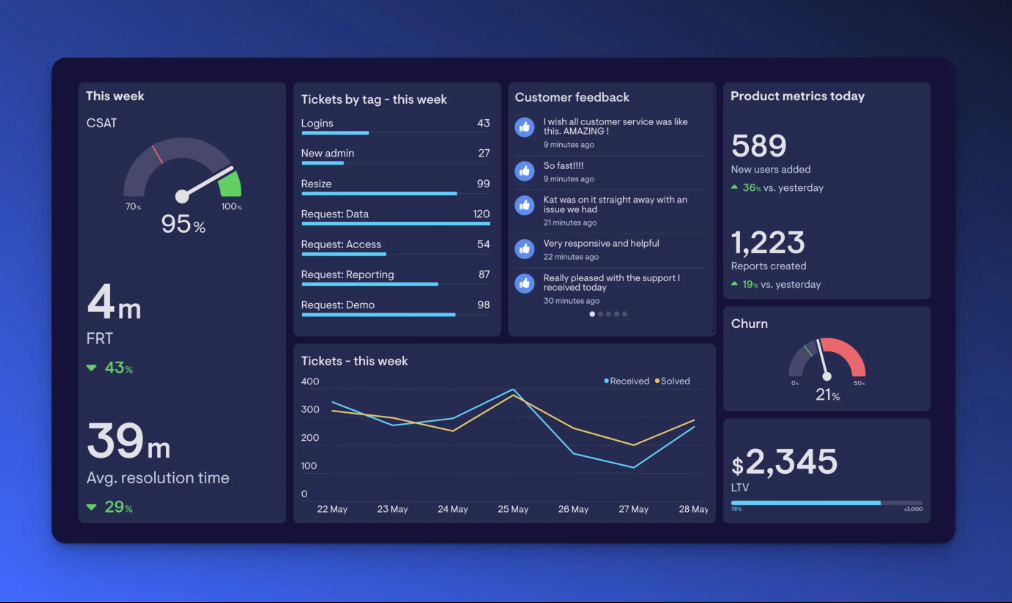
Investor ROI Dashboard
Maintain a live summary of:
- active pilots
- customer savings
- expansion signals
- revenue impact indicators
This turns storytelling into evidence.
Final Thoughts: Turning Intelligence into Investment
In today’s funding environment, building an AI product is only half the journey. Communicating its business impact is the other half.
Investors want proof that your solution:
- reduces costs
- increases revenue
- scales efficiently
- solves real enterprise problems
When AI startups shift from describing algorithms to demonstrating outcomes, they unlock faster funding cycles, stronger valuations, and deeper enterprise trust.
At Digilancers, we help AI and SaaS companies translate innovation into measurable growth narratives that investors understand and support.
Because in 2026, capital doesn’t follow intelligence.

