
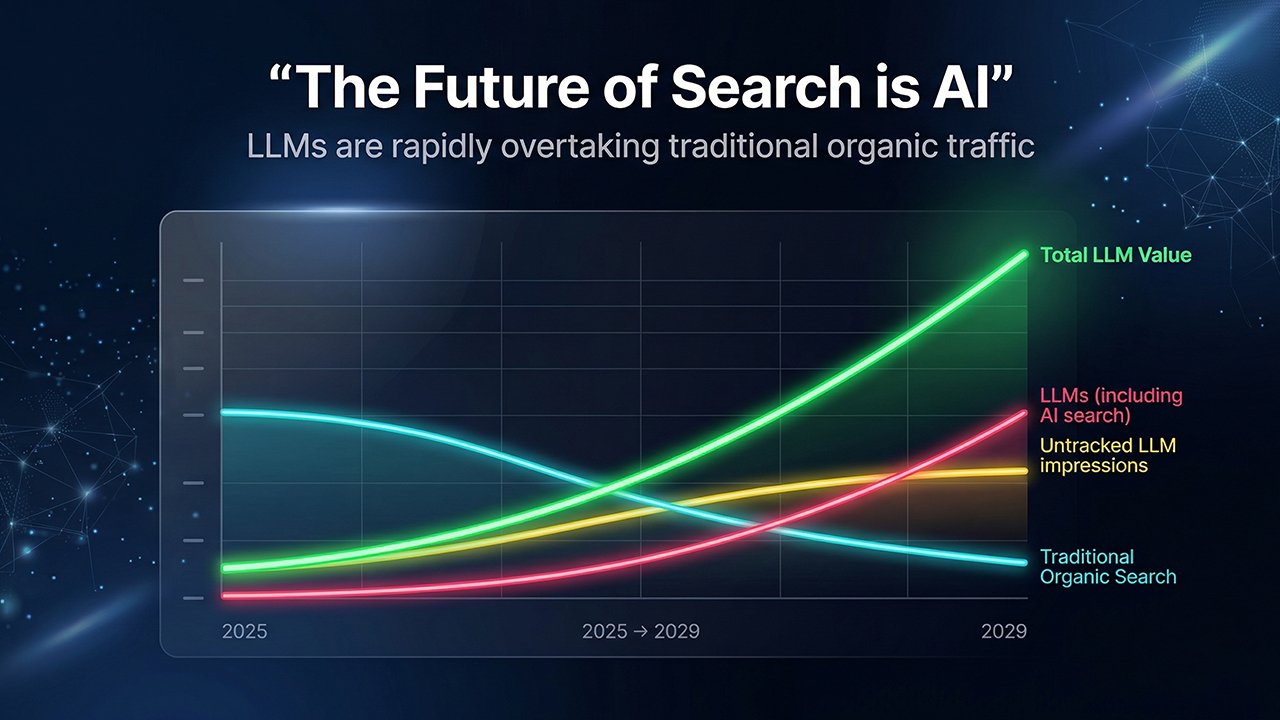
In 2026, search is no longer limited to Google rankings alone. Increasingly, customers discover brands through AI assistants like ChatGPT, Gemini, Copilot, and Perplexity. This shift is redefining how companies build online authority and visibility. Businesses that optimize for AI discoverability today will dominate digital mindshare tomorrow.
This guide explains how Large Language Models (LLMs) perceive your business—and how you can improve your AI brand visibility strategically.
AI Brand Visibility: How LLMs Perceive Your Business
Table of Contents
- Introduction: The Rise of AI Discovery
- What Is AI Brand Visibility?
- How LLMs Understand Brands
- Why Traditional SEO Alone Is No Longer Enough
- Key Signals LLMs Use to Evaluate Your Business
- Content Authority and Semantic Trust
- The Role of Structured Data and Knowledge Graphs
- AI Search vs Traditional Search: Key Differences
- Strategies to Improve AI Brand Visibility
- Common Mistakes Businesses Make
- Measuring AI Visibility Performance
- Future Trends in AI-Driven Brand Discovery
- How Digilancers Helps Businesses Win AI Search
1. Introduction: The Rise of AI Discovery
Search behavior is evolving rapidly. Instead of typing keywords into search engines, users now ask questions directly to AI systems:
- “Best SaaS marketing agency for startups”
- “Top performance marketing companies in India”
- “Who helps improve Google Ads ROI?”
AI tools respond with curated answers rather than lists of links. If your business isn’t mentioned in those responses, you’re invisible in the new discovery ecosystem.
That’s where AI Brand Visibility becomes essential. 🚀
2. What Is AI Brand Visibility?
AI Brand Visibility refers to how frequently and accurately AI assistants mention your company when responding to relevant user queries.
Unlike traditional SEO rankings, AI visibility depends on:
- contextual authority
- semantic clarity
- brand reputation signals
- cross-platform credibility
- structured knowledge presence
It’s not about ranking pages anymore—it’s about ranking ideas associated with your brand.
3. How LLMs Understand Brands
Large Language Models don’t “browse websites” like humans. Instead, they interpret brands using patterns learned from:
- authoritative content
- citations across platforms
- structured datasets
- topical expertise signals
- public mentions and backlinks
If your brand consistently appears in discussions around:
“performance marketing strategy”
“SaaS growth marketing”
“Google Ads optimization”
then LLMs begin associating your business with those topics.
Over time, this becomes algorithmic brand memory. 🧠
4. Why Traditional SEO Alone Is No Longer Enough
SEO still matters—but it’s no longer sufficient on its own.
Previously:
Keyword → Page Rank → Click → Conversion
Now:
Question → AI Response → Brand Mention → Trust → Conversion
This means brands must optimize not just for search engines but also for AI answer engines.
Companies that ignore this shift risk losing discovery traffic permanently.
5. Key Signals LLMs Use to Evaluate Your Business
AI systems rely on multiple signals to determine whether your brand deserves recommendation-level visibility.
Content Authority
Do you publish original insights or generic blogs?
Thought leadership increases trust dramatically.
Topical Consistency
Do you consistently publish around a niche?
Random content weakens AI positioning.
Mentions Across Platforms
Brands referenced on:
- blogs
- directories
- forums
- podcasts
- media coverage
gain stronger recognition signals.
Website Structure
Clear service positioning improves machine interpretation.
Example:
“Performance Marketing for SaaS Companies”
is better than
“Marketing Services”
6. Content Authority and Semantic Trust
AI doesn’t reward keyword stuffing.
It rewards semantic expertise.
For example, instead of writing:
“best digital marketing agency”
write:
- performance marketing frameworks
- attribution modeling strategies
- AI-driven campaign optimization
- SaaS funnel benchmarking insights
These signals tell AI systems:
“This brand understands the domain deeply.”
That builds trust layers. 📈
7. The Role of Structured Data and Knowledge Graphs
Structured data helps machines interpret your business clearly.
Important signals include:
- organization schema
- service schema
- FAQ schema
- author schema
- review schema
These elements feed into Google’s Knowledge Graph and influence how AI tools understand brand identity.
Think of schema as machine-readable credibility.
8. AI Search vs Traditional Search: Key Differences
| Factor | Traditional Search | AI Search |
| Output | Link list | Direct answers |
| Ranking | Keyword relevance | Semantic authority |
| Strategy | Page optimization | Entity optimization |
| Trust signal | Backlinks | Cross-platform validation |
| Goal | Click traffic | Brand mention visibility |
Businesses must now optimize for entity recognition, not just keywords.
9. Strategies to Improve AI Brand Visibility
Here are proven tactics companies can implement today.
Publish Expert-Level Content
Write:
- frameworks
- guides
- playbooks
- benchmarks
- industry insights
Avoid generic blog posts.
Build Topic Clusters
Example cluster:
Performance Marketing
→ Google Ads Strategy
→ SaaS Funnel Optimization
→ Conversion Tracking Setup
→ Attribution Modeling
This creates semantic depth.
Strengthen Author Credibility
AI values identifiable expertise.
Include:
- founder insights
- expert commentary
- original case studies
- LinkedIn thought leadership
People-driven brands rank better in AI responses.
Earn Brand Mentions Across Platforms
Visibility improves when your business appears in:
- guest blogs
- interviews
- podcasts
- startup directories
- review platforms
Each mention strengthens entity recognition signals.
Optimize Service Page Clarity
Instead of:
“We provide digital solutions”
write:
“We help SaaS companies scale using AI-powered performance marketing strategies.”
Precision improves machine interpretation instantly.
10. Common Mistakes Businesses Make
Many companies unknowingly reduce their AI visibility.
Typical errors include:
Publishing thin content
Ignoring structured metadata
Using vague service positioning
Copying competitor blogs
Avoiding thought leadership
AI rewards originality—not duplication.
11. Measuring AI Visibility Performance
Unlike SEO rankings, AI visibility requires different metrics.
Track:
Brand mentions in AI responses
Knowledge panel presence
Search entity strength
Topic association accuracy
Content citation frequency
These indicators show whether your brand is becoming discoverable in AI ecosystems.
12. Future Trends in AI-Driven Brand Discovery
Over the next 24 months, AI search will evolve rapidly.
Key shifts expected:
Voice-first discovery growth 🎙️
Hyper-personalized AI recommendations
Context-aware brand suggestions
Predictive intent marketing
Real-time semantic ranking updates
Companies investing early will gain exponential advantage.
13. How Digilancers Helps Businesses Win AI Search
At Digilancers, we help companies transition from traditional SEO thinking to AI visibility engineering.
Our approach includes:
Entity-first content strategy
Semantic authority building
Knowledge graph optimization
AI-ready website structuring
Thought leadership amplification
This ensures your brand appears not just in search results—but inside AI-generated answers themselves.
Because in the AI era, visibility doesn’t mean being ranked.
It means being recommended.

